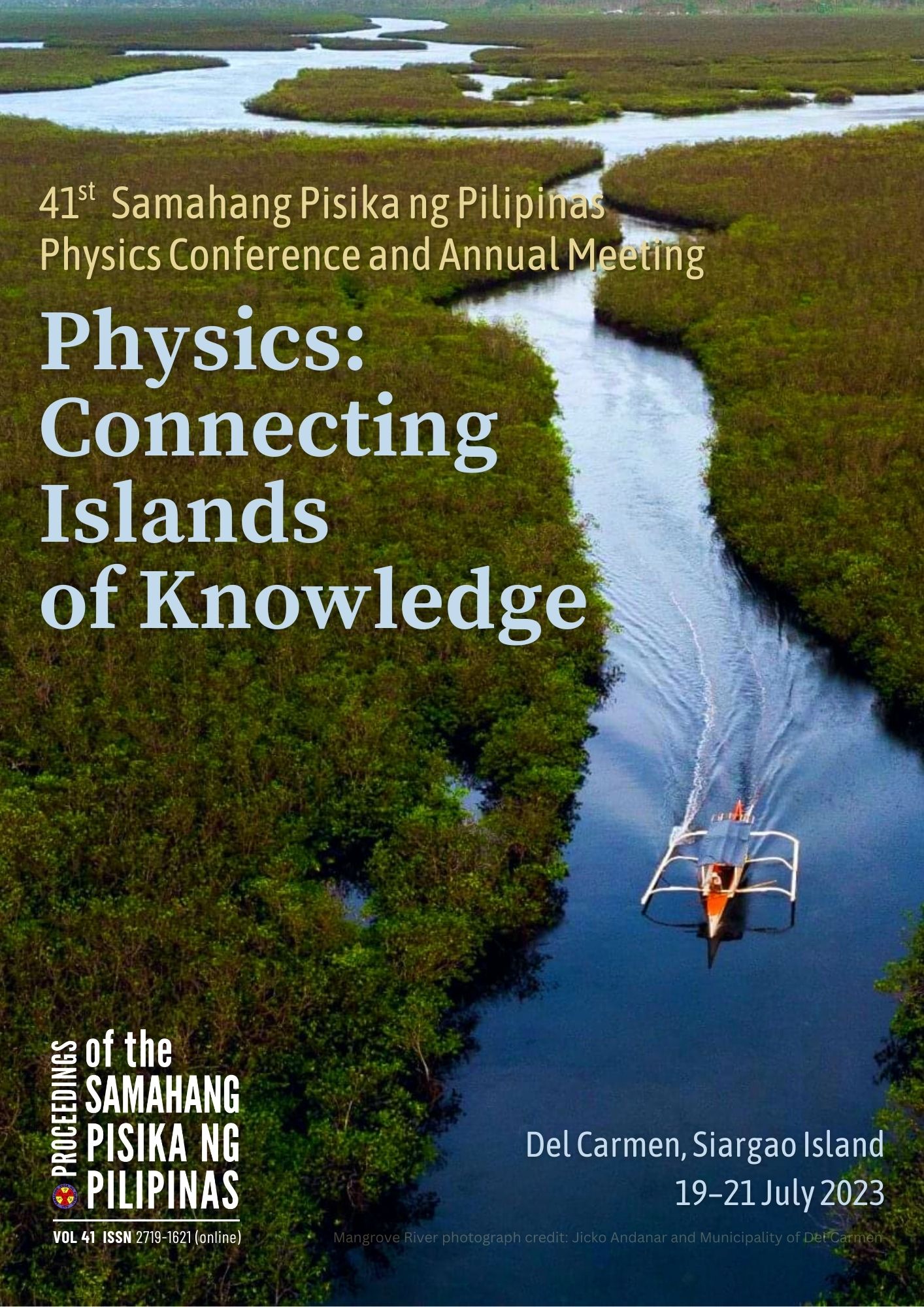
Modified Radiation Model for the steady-state population distribution in a settlement network of Siargao, Philippines
Abstract
Siargao is an island of growing tourism industry that brings about demographic, social, and topographic changes. Simulating the dynamics of migration within the island revealed recurrent migration sites that can be used for sustainable tourism planning. Here, we used a Radiation Model modified with Prisoner's Dilemma game dynamics to model migration dynamics over the island's optimized settlement network for varying cooperator fractions. We identified the municipality of General Luna as one of the popular migration sites due to its network structure: high group degree centrality, low average clustering coefficient, and high group betweenness centrality characterized this area for its high steady-state population size. Barangay Sayak in the municipality of Del Carmen is another popular migration site due to its accessible routes as well as it acting as a hub in the network. Interestingly, General Luna is a tourist center known for the surfing spot Cloud 9 while Sayak houses the airport on the island. Furthermore, varying the cooperator fraction did not affect the migration trajectory of the network's population which suggests that population distribution by the Radiation Model is only affected by the network structure.